
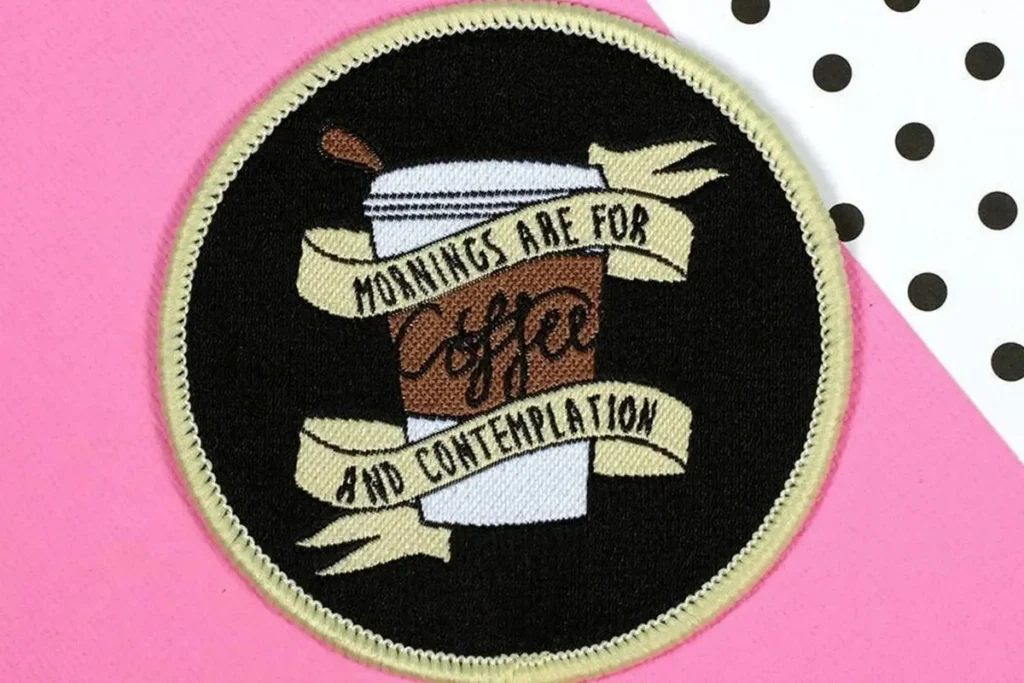
For schools, clubs, tradies, emergency services, and brands across Australia, the right pick depends on fabric type, stitch density, and how the badge needs to wear over time.
What are woven badges, and how are they made?
Woven badges are created on a loom using fine threads woven tightly together, like a small piece of fabric. This weaving method allows crisp lines, small text, and clean colour blocks that stay readable.
They are usually finished with a border and backing, then supplied for iron-on, sew-on, or Velcro-style application. Because the threads are woven rather than stitched on top, the surface feels smooth and consistent.
What are embroidered badges, and why do they feel different?
Custom woven badges are made by stitching threads on top of a base fabric, building up a raised, textured look. That texture is the classic “badge” feel many people expect for uniforms and heritage designs.
Because the stitches sit above the fabric, fine details can soften at small sizes. Embroidery suits bold shapes, simple lettering, and designs that benefit from a thicker, premium-looking profile.
How do woven badges compare to embroidery for fine detail?
Woven badges typically win when the design includes small text, thin lines, gradients, or tight spacing. The weaving process can hold detail that embroidery may blur, especially on smaller badge sizes.
If a badge needs readable unit names, web addresses, or intricate icons, woven is often the safer choice. For Australian clubs ordering small chest or cap sizes, that clarity can be the difference between “clean” and “muddy.”
Which option looks more “premium” on uniforms in Australia?
It depends on the uniform and the brand style. Embroidery often reads as classic and premium because it has depth and a tactile finish, which suits formal uniform traditions.
Woven badges look premium in a modern way, with sharper edges and a flatter, refined surface. For corporate uniforms, hospitality, and contemporary streetwear labels in Australia, woven can look more polished and deliberate.
How does texture and thickness affect comfort and wear?
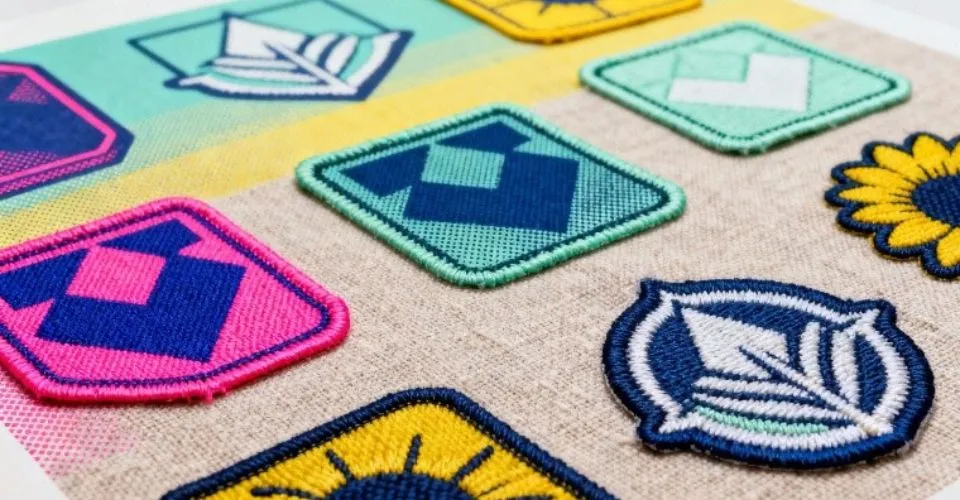
Embroidery is thicker, so it can feel heavier on lightweight garments and may be more noticeable on caps and beanies. That thickness can also catch slightly on rough use, depending on stitch height and placement.
Woven badges have a flatter profile, which can make them more comfortable on work shirts, sports jerseys, and hi-vis layers. Reduced bulk can be especially useful for school uniforms and community team apparel, where a smoother badge may help minimise rubbing, stiffness, and discomfort during regular wear.
Which lasts longer with washing, sun, and outdoor use?
Both can last well if made properly, but the wear pattern differs. Embroidery can snag if exposed stitches catch, while woven surfaces can resist snagging because the face is smoother.
In many Australian settings, UV and frequent washing matter more than the style itself. Quality threads and colourfast dyeing are key either way. Woven badges can hold crisp detail longer because there are no raised stitches to flatten over time.
Are woven badges better for small text and logos?
Yes, in most cases. Woven badges are often chosen specifically because they can reproduce small lettering and fine logo geometry more accurately.
That matters for Australian businesses that need consistent brand marks across staff uniforms, promotional giveaways, and event merchandise. Woven patches are particularly useful for detailed logos and small lettering, as their tighter construction can maintain legibility when designs need to be produced at smaller sizes.
Which is more cost-effective for Australian orders?
Pricing depends on size, colours, border type, backing, and quantity. Embroidery can become more expensive when designs require high stitch counts, because more stitching means more production time.
Woven badges can be cost-effective for detailed artwork because detail does not rely on heavy stitch density. For Australian groups ordering in bulk for clubs, schools, and surf lifesaving support crews, the best value often comes from matching the style to the artwork complexity.
What backing options work best for Australian uniforms and gear?
The best backing depends on how the badge will be applied and whether the garment is washed often. Iron-on is convenient but can struggle on some synthetics and high-heat wash cycles used by certain workplaces.
Sew-on is reliable for uniforms that see frequent laundering. Hook-and-loop is popular for tactical packs and removable ID panels. Woven badges and embroidered badges can both be supplied with these backing options, so the decision should be driven by use, not just appearance.
How should they choose between woven and embroidered for common Australian use cases?
They should start by looking at the artwork and where it will be worn. If the design is intricate, small, or text-heavy, woven badges are usually the clearer choice.
If the design is bold and they want a traditional, raised finish, embroidery is often a better match. For Australian schools, embroidered works well for simple house logos, while woven suits detailed crests. For tradies and hospitality, woven often looks neat on lightweight shirts.
What design tips help woven badges and embroidered badges look their best?
They should keep borders clean and contrast strong, especially for badges viewed at a distance. For embroidery, thicker lines and larger text help prevent detail loss and keep the stitching readable.
For woven badges, they can use finer lines and smaller text, but should still avoid ultra-thin elements that could disappear when viewed from a few metres away. It also helps to choose thread colours that match the brand palette and work under harsh Australian sunlight.
What’s the simplest way to decide before placing an order?
They should ask what matters most: sharp detail or classic texture. If detail and legibility come first, woven badges are usually the best fit. If heritage, depth, and a traditional uniform look come first, embroidery is often the answer.
A practical approach is to request a digital proof and compare how the small text and edges will render at the final size. In Australia, where badges often need to survive sport, work, and weekly washing, choosing the right style upfront saves time and reorders.
FAQs (Frequently Asked Questions)
What are the main differences between woven and embroidered badges in terms of appearance and texture?
Woven badges have a flatter, sharper look with a smooth and consistent surface because the threads are woven tightly together like fabric. Embroidered badges feature a thicker, more textured finish due to stitched threads sitting above the base fabric, giving a classic raised badge feel.
Which badge type is better for fine detail and small text on uniforms?
Woven badges are typically better for fine details such as small text, thin lines, gradients, and intricate icons because their weaving process maintains crispness and clarity even at small sizes. Embroidery may blur fine details when scaled down.
How do woven and embroidered badges compare in terms of durability for Australian outdoor use?
Both woven and embroidered badges can last well if made with quality threads and colourfast dyeing. Woven badges resist snagging better due to their smooth surface and maintain crisp detail longer without stitches flattening over time. Embroidery can snag if exposed stitches catch but offers a traditional textured look.
Which badge style looks more premium on Australian uniforms?
Embroidery often reads as classic and premium, with its depth and tactile finish making it well suited to formal uniform traditions. Woven badges provide a modern premium look with sharper edges and a refined flat surface, making them popular for corporate, hospitality, and contemporary streetwear uniforms in Australia. Sizing and placement rules for school badges can also influence which finish works best for a blazer and how the badge complements the overall uniform.
What backing options are available for woven and embroidered badges suitable for Australian uniforms?
Both woven and embroidered badges can be supplied with iron-on, sew-on, or hook-and-loop (Velcro) backings. Iron-on is convenient but may not hold up well on some synthetic fabrics or high-heat washing cycles common in certain workplaces. Sew-on is reliable for frequently laundered uniforms, while hook-and-loop is favored for tactical gear or removable ID panels.
How should Australian schools, clubs, or businesses choose between woven and embroidered badges?
They should consider the design complexity and garment use. For intricate designs with small text or detailed crests, woven badges provide clearer legibility. For bold shapes or traditional raised finishes like simple house logos or heritage designs, embroidery is suitable. Additionally, consider fabric type, comfort needs, and how the badge will wear over time to make the best choice.